


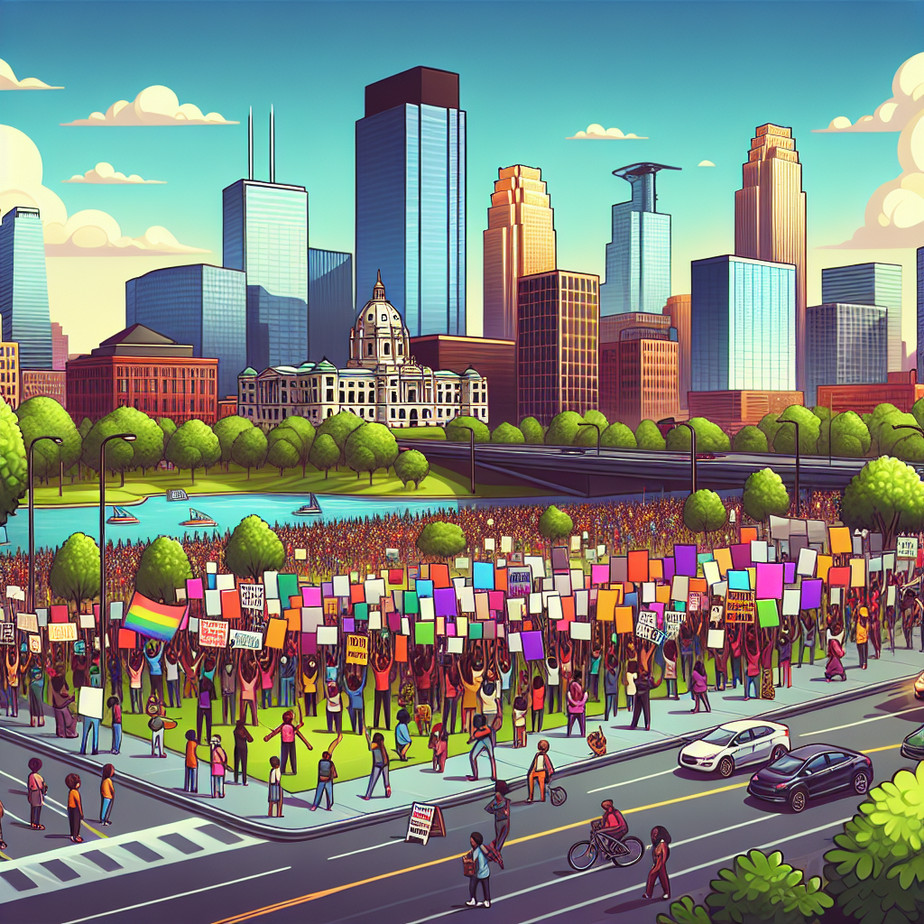




A recent, unsettling message from Minneapolis cuts through the din of daily news: a public call to arms, urging specific actions against perceived adversaries. It’s a stark reminder that beneath the surface of public discourse, volatile currents are flowing, shaping the very definition of domestic stability.
This incident, involving an individual identified as ‘Transtifa Kyle’ and explicit instructions to “Get Your F**king Guns, Stop These F**king People,” isn’t an isolated anomaly. It echoes a broader trend observed by federal agencies—a landscape where the lines between political dissent and calls for direct action are increasingly blurred. It compels us to look beyond the immediate headline and analyze the deeper shifts occurring within our society’s threat landscape.
The Shifting Contours of Domestic Extremism
For years, analysts have worked to categorize and understand domestic threats, often through the lens of established ideological groups. However, what we’re witnessing now is a more complex phenomenon. The Federal Bureau of Investigation’s Counterterrorism Division, about a year ago, highlighted an emerging domestic threat vector described as “nihilistic.” This descriptor is crucial, suggesting a departure from traditional, ideologically coherent movements with clear political aims.
In practice, we often see that nihilistic groups or individuals aren’t necessarily driven by a singular, overarching political ideology in the conventional sense. Instead, their motivation can stem from a desire for disruption, a rejection of established norms, or a profound disillusionment that manifests as a willingness to engage in chaos. This makes them particularly difficult to predict and counter, as their grievances can be diffuse and their targets varied.
The term ‘Transtifa’ itself, a portmanteau emerging from specific online communities, indicates a blending of identities and perceived affiliations that further complicates threat assessment. It speaks to a fluidity and adaptability in how certain segments of the population self-identify and organize, challenging conventional intelligence frameworks.
The Potency of Incendiary Rhetoric
The specific language used—”Get Your F**king Guns, Stop These F**king People”—is a direct, unambiguous call to violence. This isn’t abstract political debate; it’s an actionable instruction. Such rhetoric, when disseminated publicly, has a tangible impact, not just on those targeted, but on the broader societal fabric. It normalizes aggression and chips away at the foundational principles of peaceful resolution.
A common observation among analysts is that the escalation from heated debate to direct incitement can be swift, particularly in environments where grievances are amplified and perceived injustices run deep. When individuals feel disenfranchised or under attack, even vague calls for action can be interpreted as directives, leading to real-world consequences.
This situation underscores the perennial challenge for law enforcement and intelligence agencies: distinguishing protected free speech from genuine incitement to violence. The legal and ethical boundaries are often contested, especially when the calls are specific but the actors are decentralized and less formally organized.
Navigating the Digital Echo Chamber
While the news account doesn’t detail the platform, such messages rarely exist in a vacuum. They resonate within specific online spaces, where like-minded individuals can find validation and reinforcement. These digital echo chambers can accelerate the radicalization process, transforming nascent grievances into concrete plans of action.
Examining the broader landscape, it’s evident that the speed and reach of digital communication mean that instructions, however extreme, can propagate rapidly. This requires constant vigilance and an adaptive approach to monitoring and understanding the evolving lexicon of extremism.
The Challenge of Understanding Decentralized Threats
The FBI’s warning about emerging domestic threats highlights a shift from hierarchical, easily identifiable groups to more fluid, leaderless, or decentralized networks. This ‘Transtifa Kyle’ incident appears to fit this mold, representing an individual voice amplifying a sentiment rather than speaking on behalf of a monolithic organization.
This decentralized nature presents significant hurdles for conventional counterterrorism strategies. It’s akin to tracking individual cells in a sprawling, interconnected web rather than a single, distinct entity. Each node can be a source of information, a point of radicalization, or a potential instigator of violence.
Furthermore, the motivation behind these emerging domestic threats can be highly individualized, making a singular preventative approach difficult. Understanding the spectrum of grievances—from socioeconomic dissatisfaction to perceived cultural attacks—is paramount. The challenge lies in distinguishing between passionate advocacy and dangerous incitement, especially when the boundaries are deliberately obscured.
It’s important to acknowledge the complexities of such investigations. Federal agencies, like the FBI, regularly publish insights into domestic terrorism threats, emphasizing the multifaceted nature of these challenges and the need for a comprehensive understanding that goes beyond simplistic labels.
Looking Ahead: Fostering Resilience and Clarity
The Minneapolis incident serves as a critical indicator of the continuing volatility in certain segments of our society. Addressing these emerging domestic threats requires a multi-pronged approach: robust intelligence gathering, clear communication from authorities, and a societal commitment to rejecting calls for violence, regardless of their source.
One benefit of publicly acknowledging these developments is that it fosters a more informed public. When citizens understand the nuances of evolving threats, they are better equipped to discern dangerous rhetoric from legitimate debate and to promote community resilience against divisive forces. This clarity is essential for safeguarding not just physical security, but also the health of our civic discourse.
Frequently Asked Questions
Q: What does ‘nihilistic’ mean in the context of domestic threats?
A: It describes threats driven by a rejection of existing social and political orders, often with a desire for disruption or chaos, rather than a clear, replacement ideology or specific policy goal.
Q: How do authorities distinguish between free speech and incitement to violence?
A: This is a complex legal area. Generally, incitement involves speech intended to provoke immediate violence and likely to produce such action. Free speech, while broad, does not protect direct calls for illegal acts or violence.
Q: Are these emerging threats associated with any specific political ideology?
A: The FBI’s characterization of “nihilistic” threats suggests they may transcend traditional ideological categories, drawing from various grievances or a general anti-establishment sentiment, making classification more challenging.
Q: What role do online platforms play in these incidents?
A: While not always the direct cause, online platforms can serve as conduits for disseminating incendiary messages, providing spaces for like-minded individuals to connect, and potentially accelerating radicalization due to rapid information sharing.
The Path Forward: Vigilance and Understanding
The call to action from Minneapolis is a stark reminder that the landscape of domestic security is continually evolving. It challenges us to move beyond preconceived notions of extremism and to confront the reality of increasingly fluid, digitally-amplified calls for direct action. For individuals, understanding these dynamics means being discerning consumers of information and rejecting inflammatory rhetoric. For institutions, it means fostering adaptive strategies that can address threats whether they emanate from established groups or from more decentralized, emotionally charged exhortations.
Ultimately, navigating these complexities requires not just vigilance, but a deeper commitment to understanding the underlying factors that fuel such anger and to reinforcing the civic norms that prevent rhetoric from escalating into real-world harm. This is how we collectively build a more resilient society capable of withstanding the pressures of divisive and dangerous narratives.